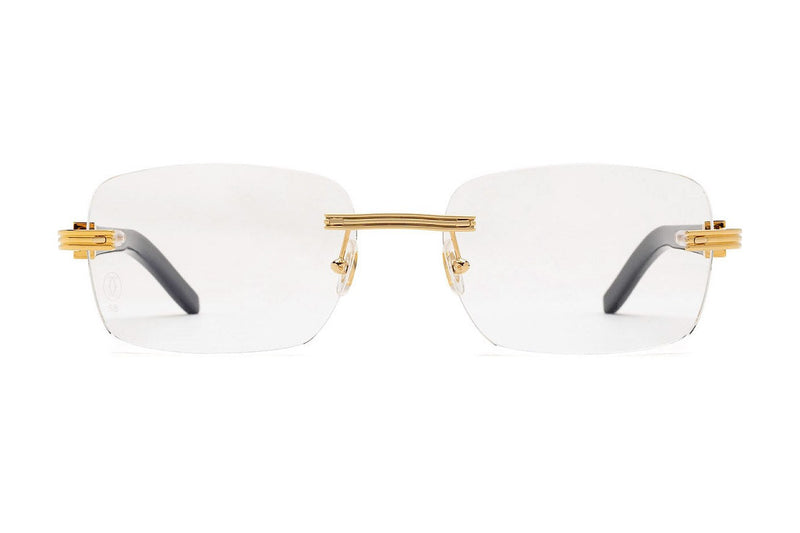

Cartier
CT0286O
Eye size 56 millimeters, bridge 17 millimeters, temple 145 millimeters
$3,595.00
Cartier
$3,595.00
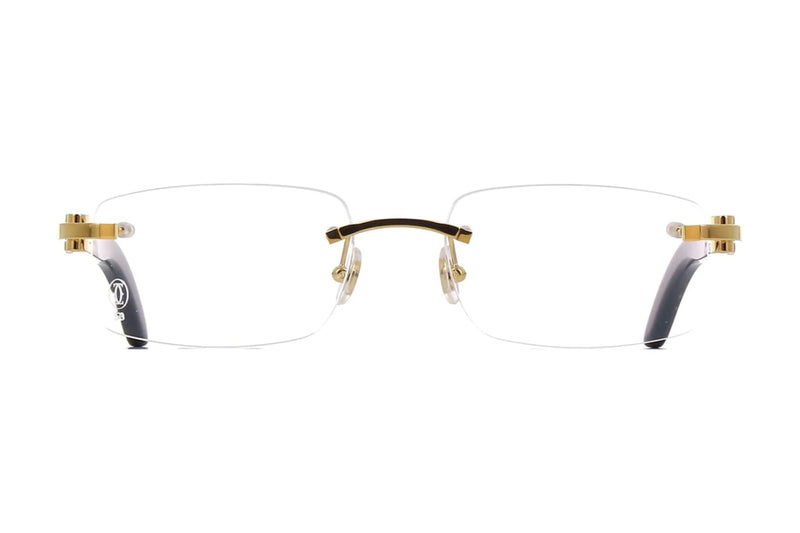
Cartier
$3,595.00
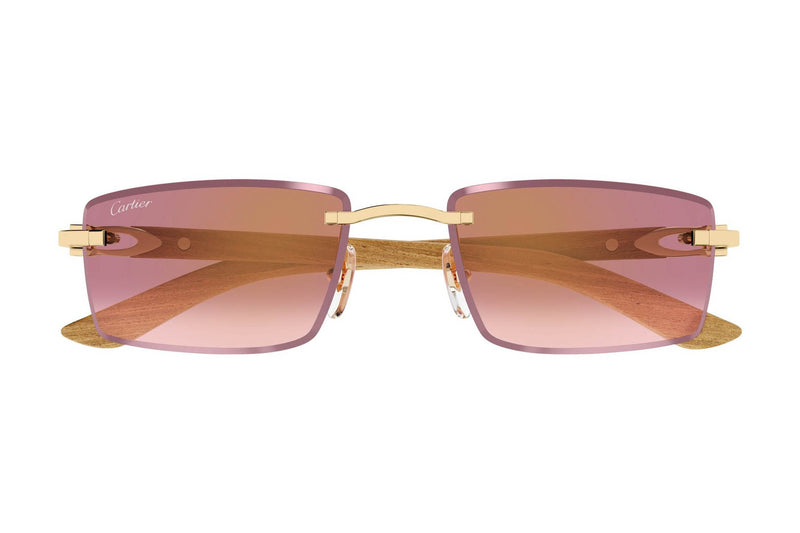
Cartier
$3,095.00
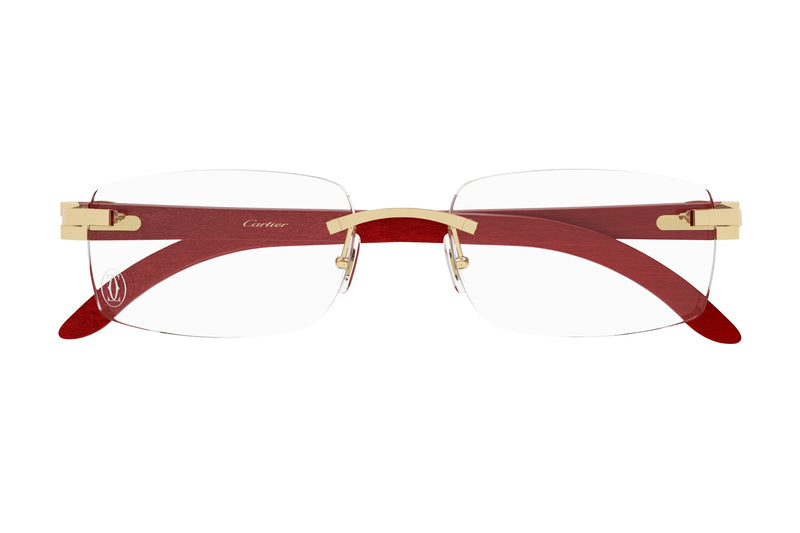
Cartier
$3,095.00
Cartier offers some of its frames with temples of buffalo horn or wood, set against metal with a gold or platinum finish. Some are rimless: no rim round the lens, just the metal fittings and the horn or wood of the temples. In Detroit, where Cartier glasses are part of the city's style, the horn frames are called Buffs and the wood frames Woods. They are nicknames; Cartier's own listings give the line and the material instead.
Cartier sets horn and wood on several lines. Two of them are C Décor, which Cartier's site also calls Décor C de Cartier, a line built around the brand's C initial, and Première de Cartier, which the brand says echoes its first eyewear of the 1980s, in noble materials with a gadroon motif. Every Cartier frame in the shop is on the Cartier page.
Horn is a natural material. Its colour and marbling vary from one piece to the next, so no two pairs of Buffs are marked alike, even in the same model and colour. The photographs show the model; the pair itself carries its own markings. Wood grain varies in the same way.
Horn and wood want different care from metal or acetate. Cartier's own advice is to keep water and detergents off horn, and water, grease, make-up and cleaning products off wood; to keep the glasses in their case and away from heat; and to clean horn with a horn cream two or three times a year, depending on its condition. Wood needs nothing more, and Cartier says it takes on a patina over the years.
The frames are sold without prescription lenses. An optician, in our shops or your own, fits the lenses and confirms, with your measurements, whether a frame suits your prescription. The Cartier fit guide explains the sizes, and the lens guide covers the fitting. Every frame ships free and insured within the US.
Buffs is short for buffalo, after the buffalo horn in the temples. The name comes from Detroit, where Cartier glasses are part of the city's style and turn up often in its hip-hop. Cartier frames with wood temples got the name Woods the same way. Cartier's own listings use neither name: they give the line and the material, for example C Décor sunglasses in marbled black buffalo horn. Dealers and collectors now use both nicknames, and this page gathers both kinds.
Yes. Cartier describes its horn frames as buffalo horn, and its care advice treats it as genuine horn, which needs different care from metal or plastic. Because it is natural, the colour and marbling vary from pair to pair, so the pair you receive will not match another pair, or a photograph, exactly. The wood frames are real wood, and their grain varies in the same way.
It depends on the prescription and the frame, and the optician decides. We sell the frame only; an optician, in our shops or your own, fits the lenses and confirms suitability with your measurements before any lens is cut. On a rimless frame the lenses are drilled and fixed to the metal fittings, so the edge of each lens is on show: a strong prescription may need a thinner, higher-index material, and a shallow lens can rule out some progressive designs. Not every optician drills lenses, so ask first. A sunglass arrives with its own tinted lenses, which are not prescription; whether it can take prescription lenses is also the optician's call. Our lens guide explains the fitting.
Keep water, soap, make-up and cleaning sprays off the horn and wood. Cartier's own care advice keeps horn away from water, detergents, degreasing products and extreme temperatures, and warns that water, grease, make-up and cleaning products can damage wood's porous fibres. Clean the lenses with a microfibre cloth, keeping any liquid off the temples, and wipe the horn or wood with a soft dry cloth. Cartier's advice is to clean horn with a horn cream two or three times a year, depending on its condition; wood needs no special care and takes on a patina over the years. Keep the glasses in their case when you are not wearing them, and never leave them in a hot car. If a temple loosens or a lens moves, take them to an optician rather than tightening anything yourself.


