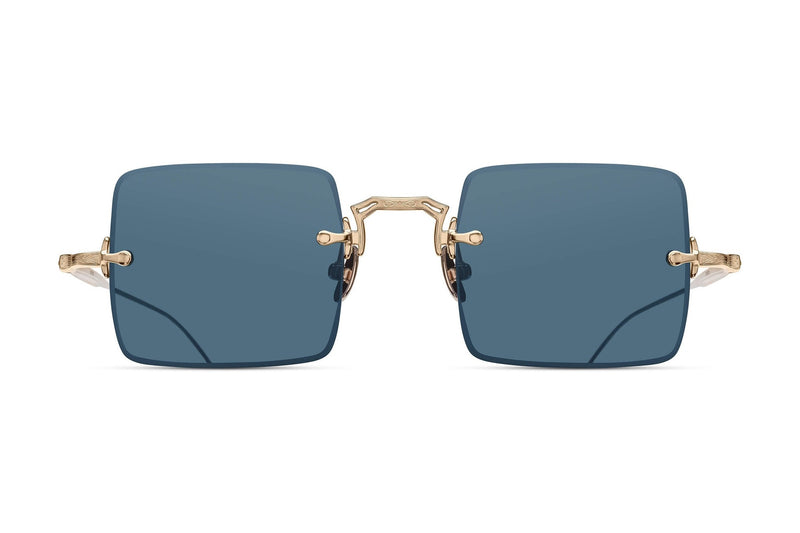

Matsuda
M5001
Eye size 46 millimeters, bridge 22 millimeters, temple 145 millimeters
$680.00
Matsuda
$680.00
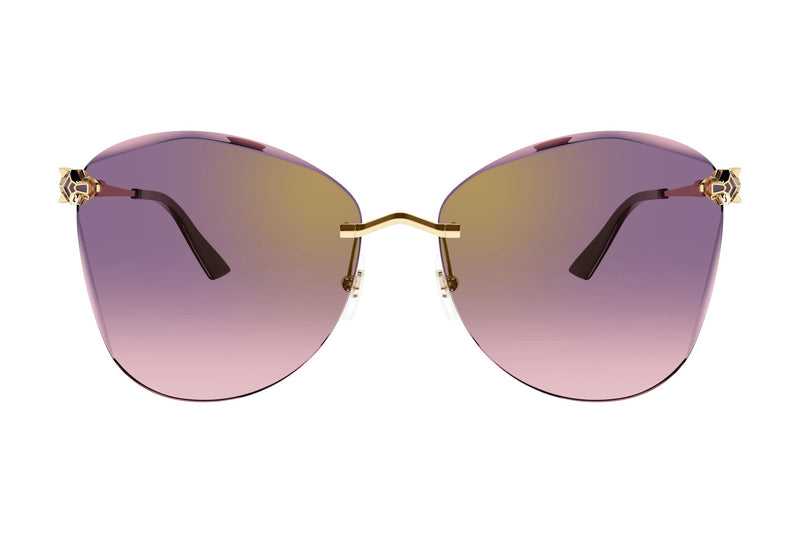
Cartier
$1,495.00
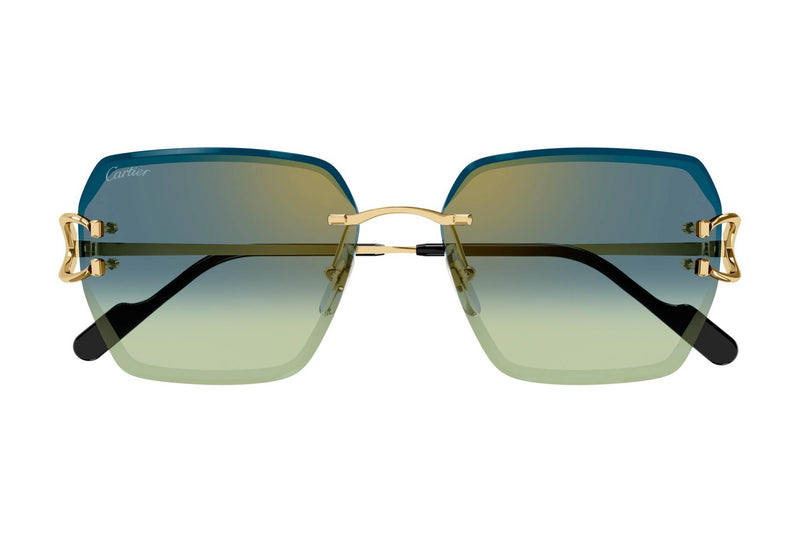
Cartier
$1,395.00
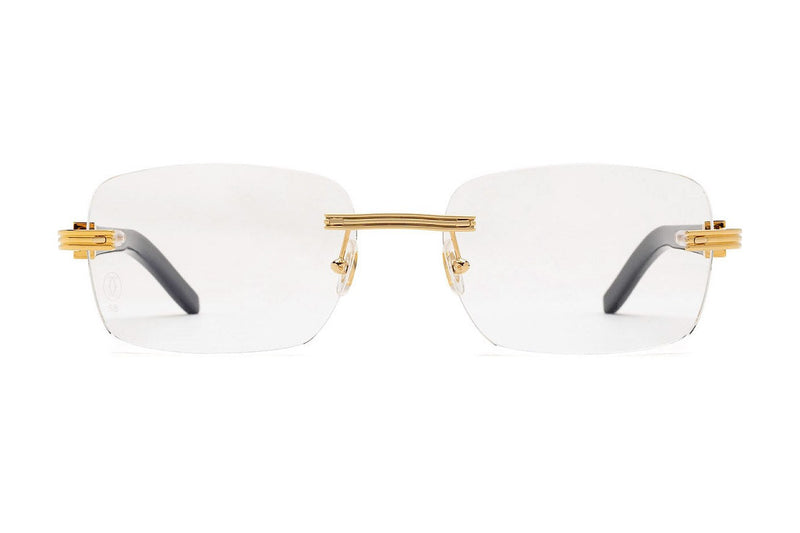
Cartier
$3,595.00
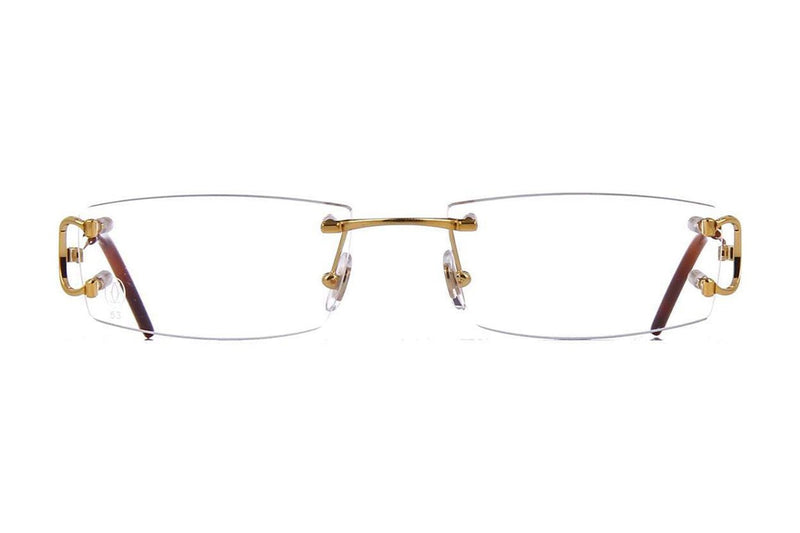
Cartier
$1,210.00
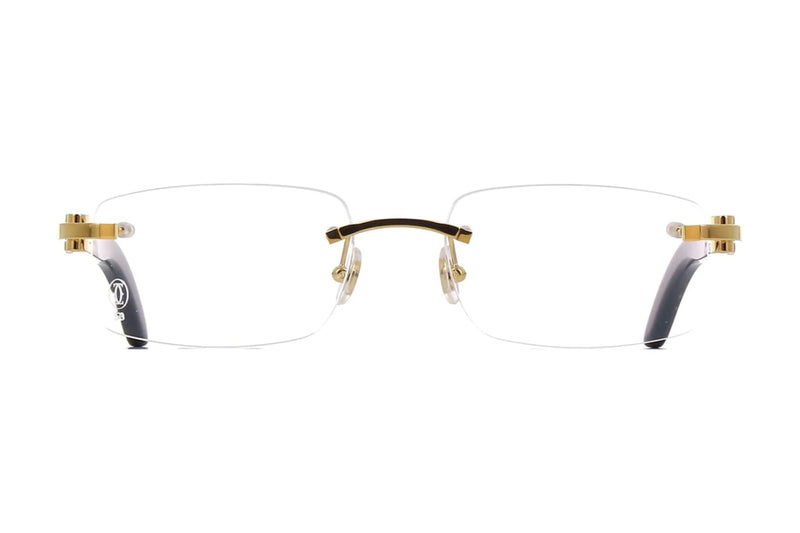
Cartier
$3,595.00
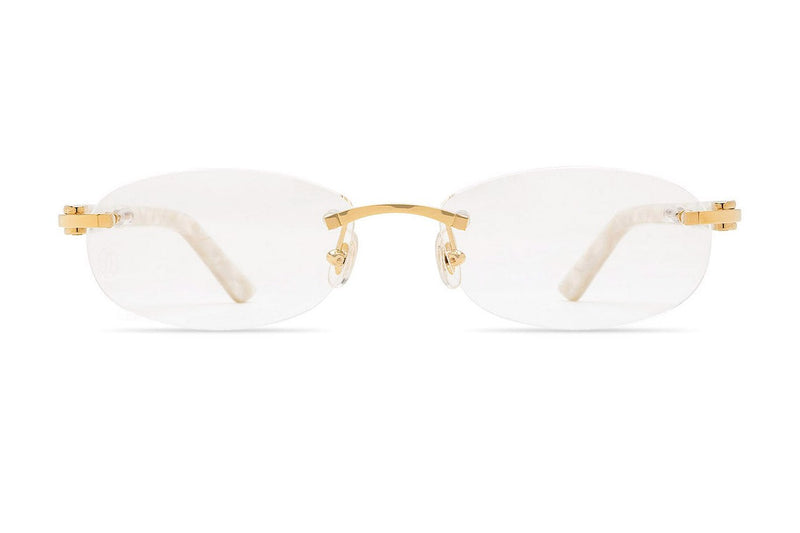
Cartier
$1,345.00
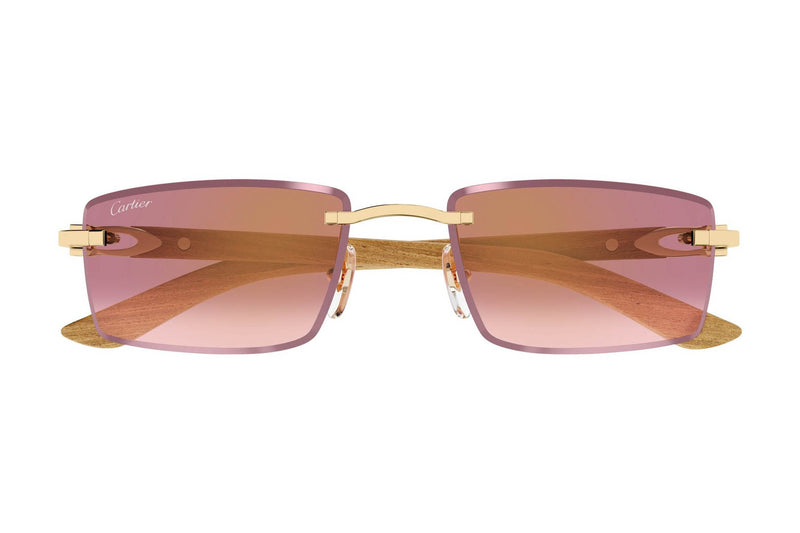
Cartier
$3,095.00
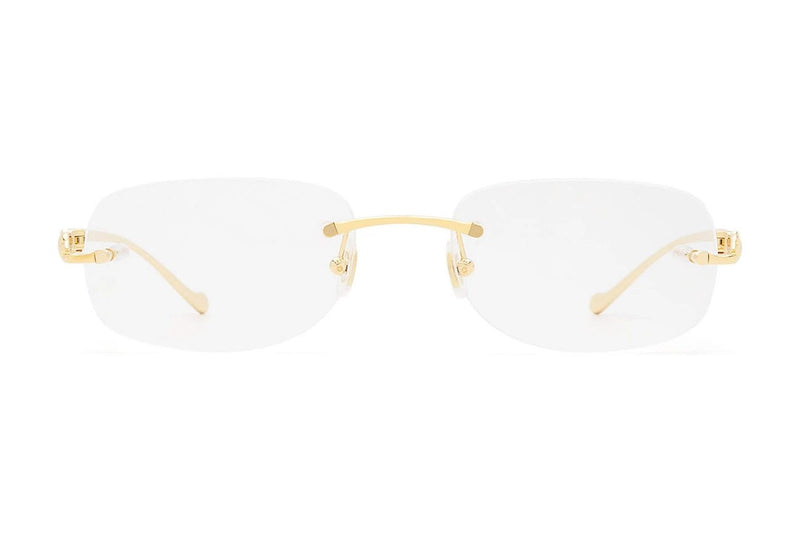
Cartier
$1,345.00
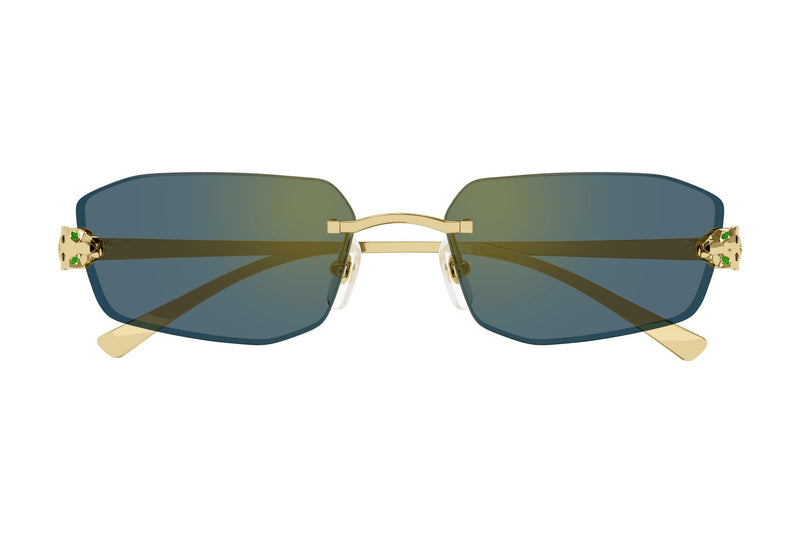
Cartier
$1,645.00
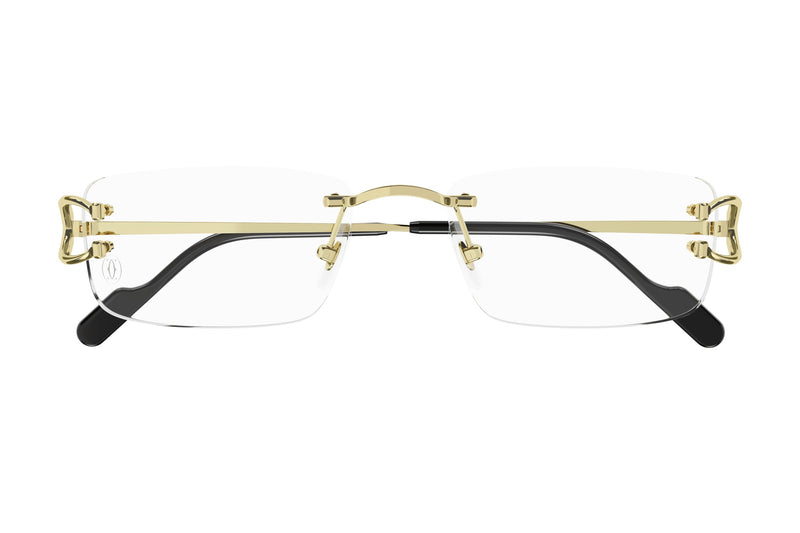
Cartier
$1,345.00
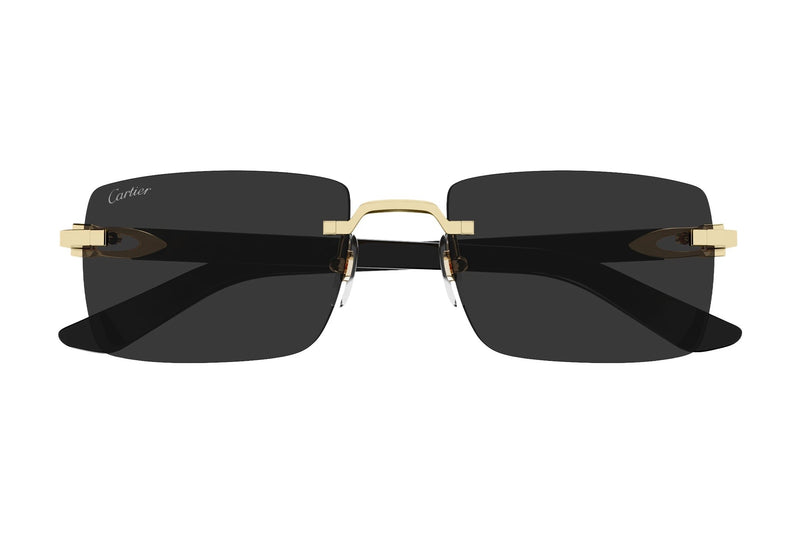
Cartier
$1,345.00
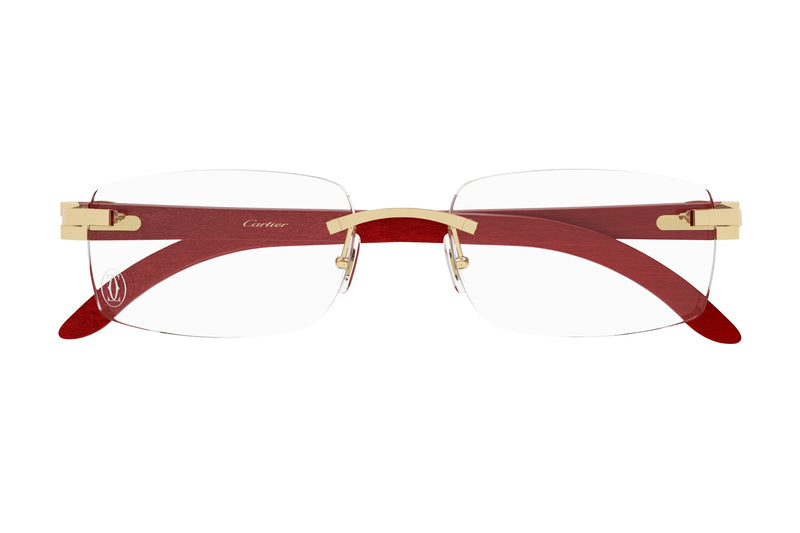
Cartier
$3,095.00
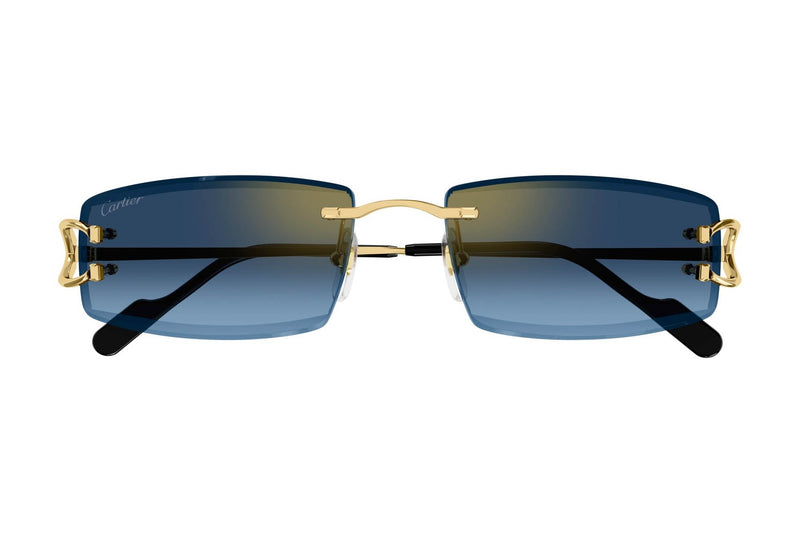
Cartier
$1,395.00
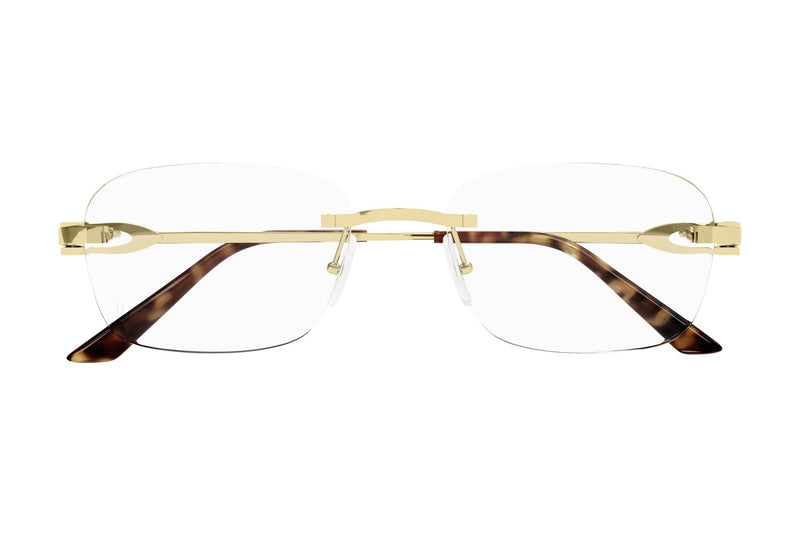
Cartier
$1,345.00
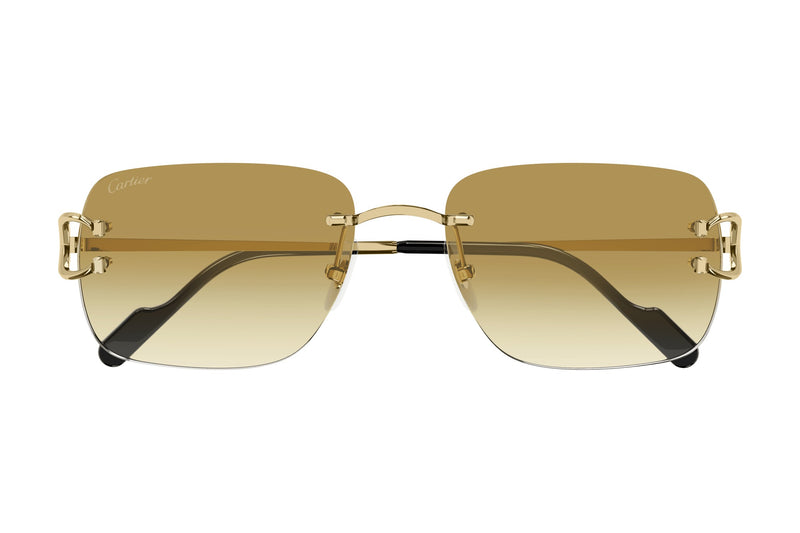
Cartier
$1,345.00
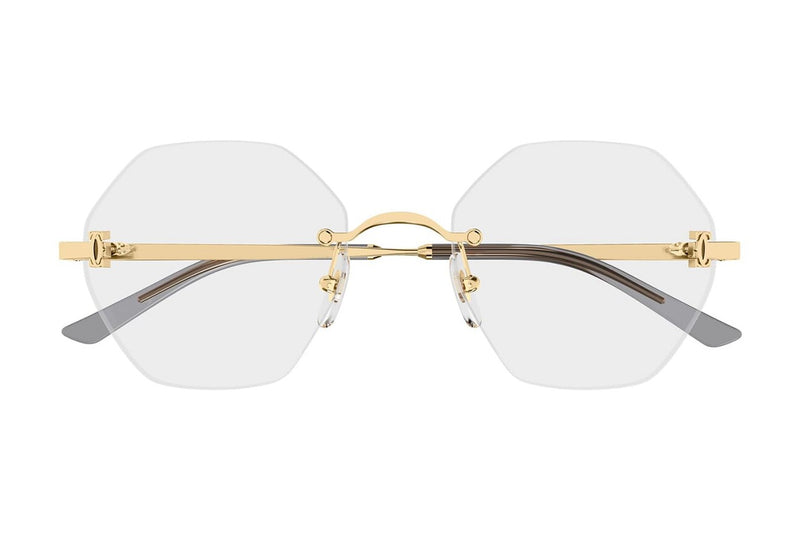
Cartier
$1,245.00
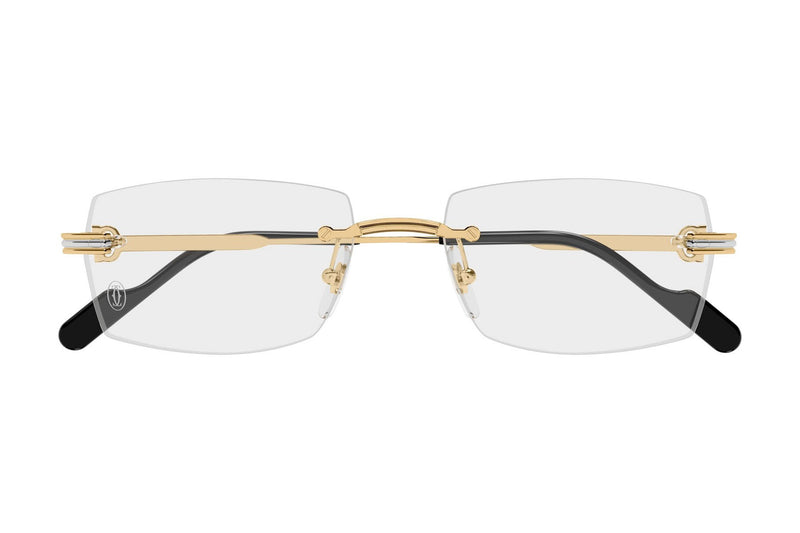
Cartier
$1,395.00
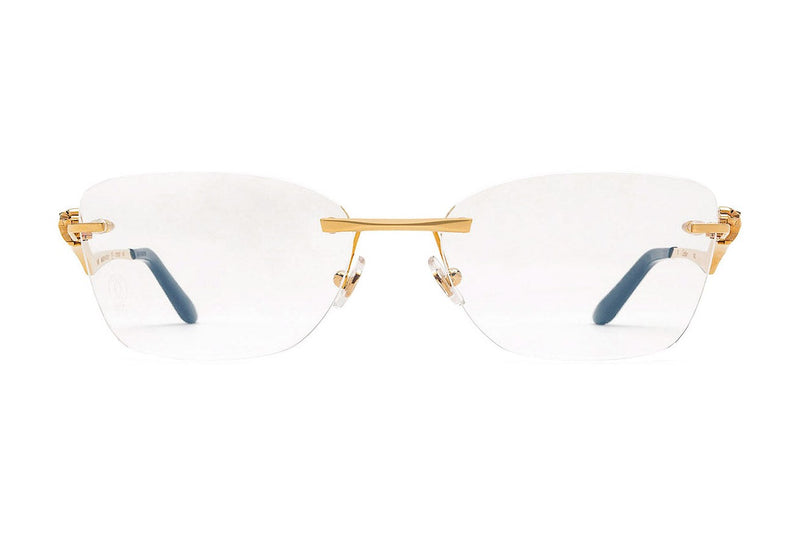
Cartier
$1,445.00
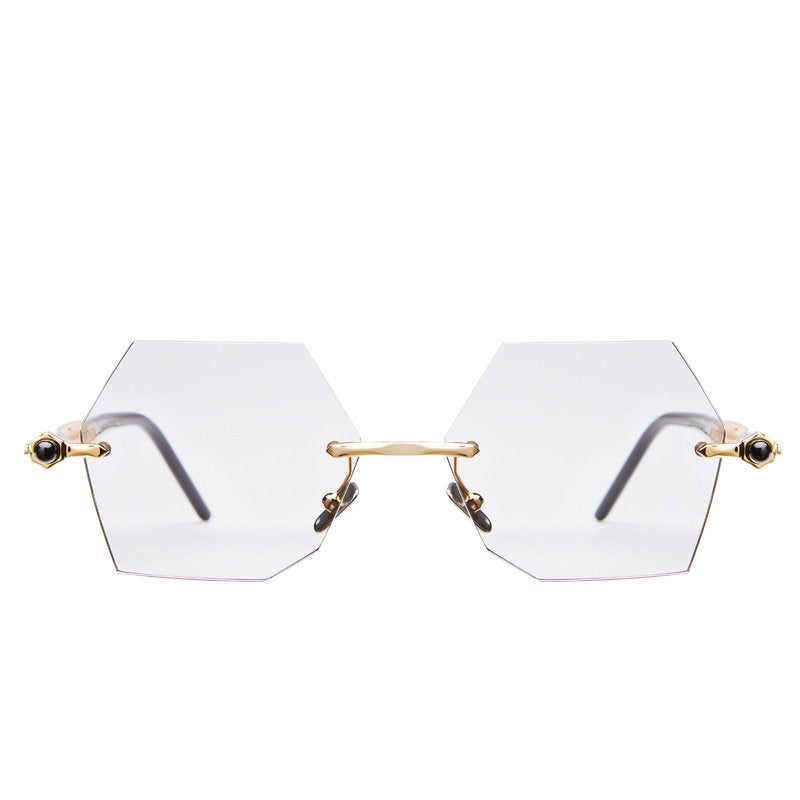
KUBORAUM
On sale: $590.00, was $790.00
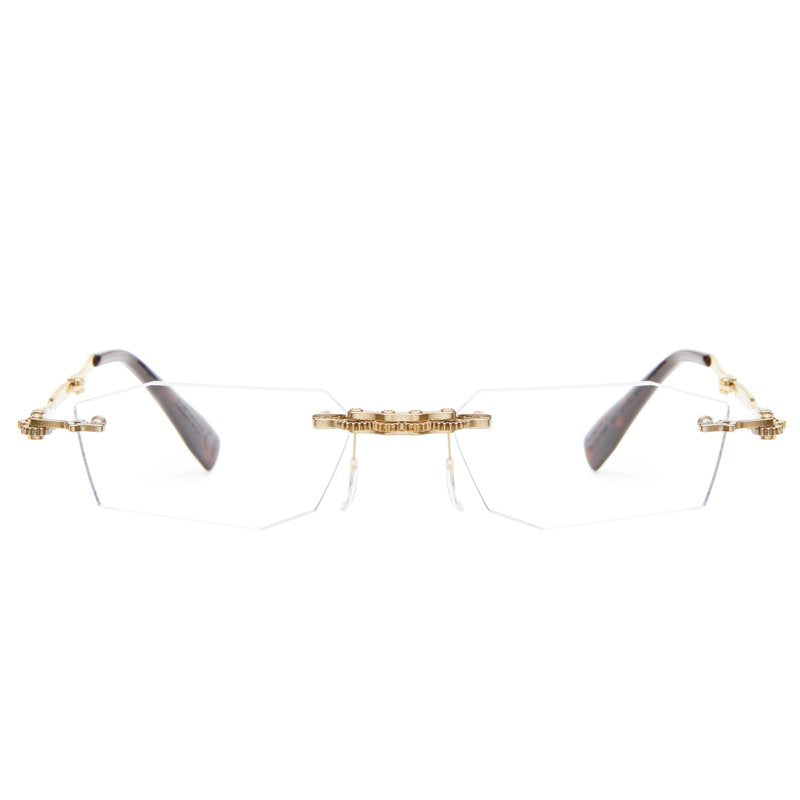
KUBORAUM
On sale: $740.00, was $990.00
A rimless frame has no rim. Each lens is usually drilled near the bridge and the temples and fixed with small screws or push-fit bushings, so the lens becomes part of the structure and its edge is the outline of the glasses. Rimless glasses weigh little and show little, which suits anyone who wants the face seen rather than the frame. They look best with a light or moderate prescription; a stronger lens shows its full edge thickness, with no rim to hide it.
Most of the rimless frames here are from Cartier, optical frames and sunglasses with Gold in the colour name Cartier gives them. On its own site, the Paris jeweller shows rimless designs in its Santos de Cartier, Panthère de Cartier and Première de Cartier lines. KUBORAUM, the Berlin brand, keeps a rimless line among its masks, and every KUBORAUM frame here is on sale and final sale. Matsuda, the Tokyo label, makes rimless designs in lightweight titanium in Japan.
The optical frames arrive with demo lenses fitted; leave them in until the fitting, because they hold the shape and give your optician the outline and hole positions to copy. A drilled lens takes load at every hole, so the optician may recommend a tough material such as Trivex or polycarbonate, or a higher-index lens to keep a stronger prescription’s edges thin. Not every optician drills lenses, so ask first; the optician confirms, with your measurements, whether a frame suits your prescription. The lens guide covers the fitting.
Care is mostly habit: both hands to put them on and take them off, temples down or in the case, and lukewarm water, a drop of washing-up liquid and a microfibre cloth to clean them. A lens that moves or clicks wants an optician’s attention before it cracks at the mount. Every frame ships free and insured within the US.
Not every one, and it is the optician’s call. A rimless lens is drilled and fixed to the frame, so its edge is on show and it carries load at each hole. A light or moderate prescription is usually straightforward; a strong one, especially a high minus, may need a higher-index material or sit better in a full rim, and a shallow lens can rule out some progressive designs. The optician confirms suitability with your measurements before any lens is cut. Sale frames are final sale, so settle the lens question first. Our lens guide explains the fitting.
Less forgiving than a full rim, but not fragile. With no rim, the lens is part of the structure, so a drop or a one-handed twist puts its force on the few points where the lens is drilled. A tough lens material such as Trivex or polycarbonate resists cracking at those points. Handled with both hands and kept in a case, a rimless frame is an everyday frame. A lens that moves or clicks is the first sign of trouble; have it seen to early rather than late.
A rimless frame has no rim at all: each lens is usually drilled near the bridge and near the temples and fixed with small screws or push-fit bushings. A semi-rimless, or half-rim, frame has a rim along the top only; the lens is grooved around its edge and held against that rim by a thin nylon cord along the bottom, with no drilling. Semi-rimless reads a little stronger on the face; rimless shows the least frame. This page gathers frames with no rim at all; a frame with a rim along the top stays on its brand’s page.
Put them on and take them off with both hands, holding the temples, so the lens mounts are not twisted. Set them down on their temples or in the case, never on the lenses. To clean, rinse under lukewarm water with a drop of washing-up liquid and dry with a clean microfibre cloth; paper tissues and shirt tails can scratch. Keep them out of a hot car. If a lens moves, clicks or sits crooked, take the glasses to an optician rather than tightening the screws yourself, because too much force at a drill hole can crack the lens.


